The Second Snake
There’s a snake at the heart of healthcare that shouldn’t be there. A second snake, really. One you can see at the literal center of the symbol of medicine: the caduceus. A staff with two snakes wound around it. Wings spreading out from the staff’s top. Found everywhere from the military to medical associations and schools, the caduceus is the most recognized symbol of medicine in the world. Too bad it’s the wrong symbol.
The symbol for medicine was intended to be an homage to the healer Asclepius from Greek mythology; said to gain his knowledge of medicinal plants from a snake. His symbol became a rod with a serpent wrapped around it. One snake. No wings.
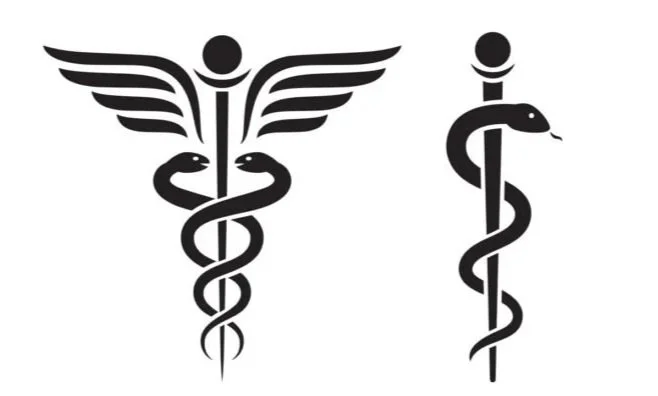
The caduceus of Hermes vs. the rod of Asclepius
Another character from Greek mythology carried a similar staff. Hermes, with the winged feet, once saw two snakes fighting and threw his staff between them to break up the dispute. The image of the two snakes wound around a staff, crowned by a pair of wings, became an appropriate symbol for the god of travel and negotiation. But Hermes is also the god of commerce and thieves, and it was his caduceus that became the symbol for “medicine”.
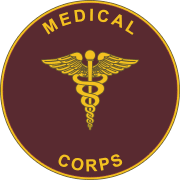
Medical Corps Emblem
The error seems to have originated from the US Army Medical Corps using the caduceus as their logo in 1902.
This use of the 2-snake symbol would be nothing more than a bit of historical trivia if the swap didn’t contain so much meaning beneath the surface. The second snake becomes the silent undoing of stated intent. Its presence reveals ulterior motives. All across the landscape of care we can see these second snakes, these backhanded symbols that say the quiet part out loud.
The second snake drapes itself across the shoulders of a doctor in a starched white lab coat, open in the front, bearing badges of authority and pockets of pens and stethoscopes. A priestly garb intended to convey hygiene, status, and wisdom now famously induces high blood pressure. The patient waits in a thin gown, often paper, tied awkwardly in the back. Intended for their comfort and convenience, the gown instead infantilizes, turning adults into clumsy children with their shirts on the wrong way. No pocket to put a phone in or place to keep a pencil for notes. No identification except the one around the wrist, tagging the patient like a bird marked for study. The second snake moves like goosebumps up the patient’s back while they sit and wait for their prognosis.
Down the hallway of the doctor’s office and in the waiting room, the walls are dotted with documents that have been posted for patients to see. Information about privacy, the patient’s bill of rights, translation services and resources, are given 8.5 x 11 inches of photocopied importance, hung with masking tape or in plastic sleeves from the stationary store. The second snake can be found if you squint at the small print. The second snake claims full disclosure, sufficient notice and regulatory compliance.
The second snake loves a medical bill. Rows of charge codes and abbreviations masquerade as transparency. Paired with the helpfully named "explanation of benefits” astronomical sums blink in and out of existence as the payers and providers negotiate your coverage. All laid out in language few understand, these gestures of clear communication leave people baffled and distraught. The second snake becomes the bottom line. The second snake becomes the dollar sign.
Beyond the symbols worn and printed on forms and signage, the second snake can also be found in language. Renaming “patient” to “consumer”, it gives the sick a word of wealth. A word to be respected, not pitied, lest the consumer march her dollars out the door. No, the second snake insists. Consumers are empowered. They have a choice on where to go for care. Unless they don’t. When health becomes a marketplace, the consumers of care become, what? The counterbalance to producers of harm? Care becomes commerce. People become conditions. Healers become capacity.
That is the game of the second snake. The inversion of care into paternalism. The proclamation of patient’s rights in the cheapest and least impactful way possible. The backhanded compliment of calling a patient a consumer. The silent undoing of all our spoken intent. The second snake is a thief of meaning. And we are meaning-making creatures. We pick up on conscious and unconscious implications of the symbols, colors, shapes and language around us. The red of a sign stops us to think before we act. A green leaf on a package implies a healthy choice. A heart in a text message can carry the weight of a thousand unsaid things. The context shapes the symbol’s meaning. And sometimes the symbol illuminates the context.
The second snake tells on itself, and we all can hear it. How many places can we see its work once we start to look? How many of them are hard-coded into our sense of the inevitable? The paperwork that ties our hands from helping a patient in the name of “risk management”. The tradeoffs we make between a more human experience and workflow efficiency. Something is wrong, but we struggle to find its source. These distortions of good intention are not inevitable. They are mistakes we can unwind, patterns we can interrupt, and logos we can change. Symbols are powerful medicine, if we learn to use them well.
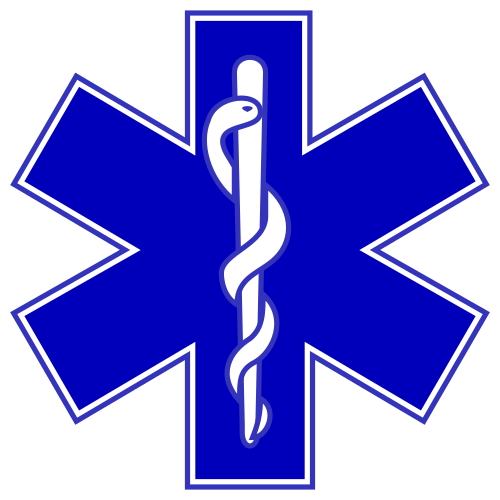
Emergency Medical Services “star of life” logo with the rod of Asclepius